From SLCC to Software Startup: Rick Hernandez is Recognized with the 2025 Rising Star Award
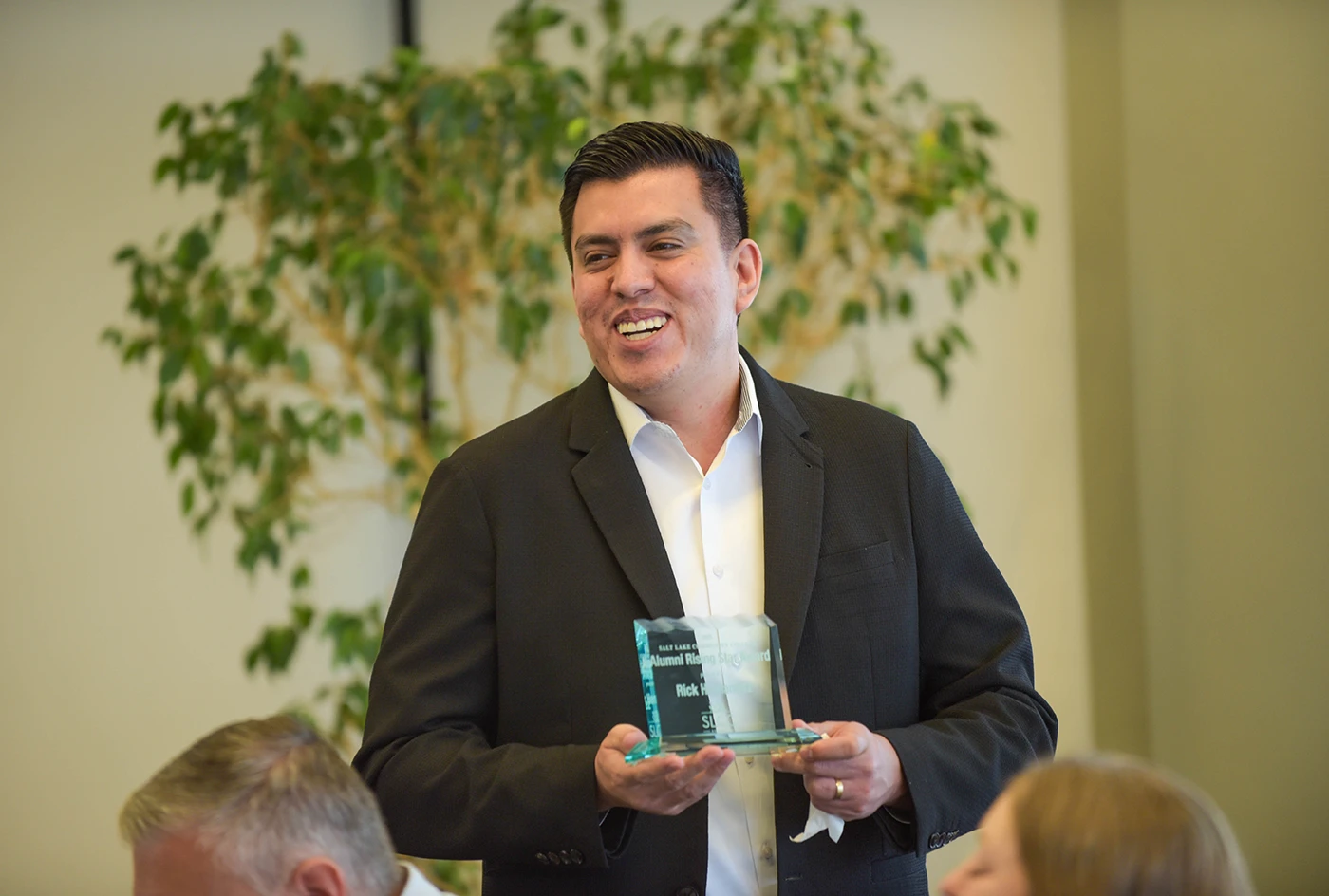
My mindset became: when things get tough, we're just getting started.
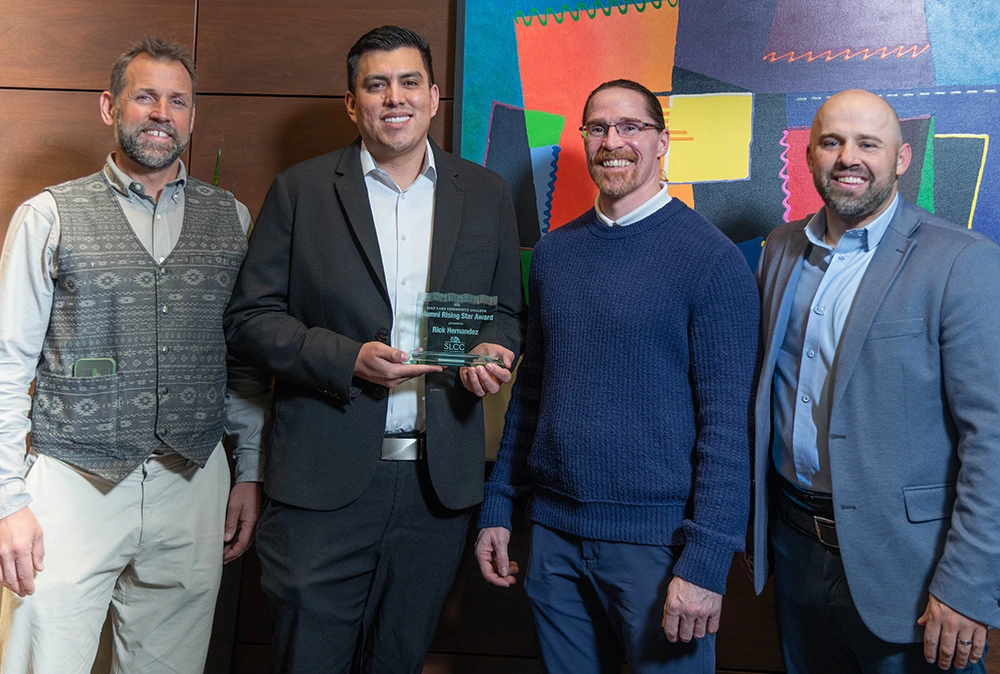
Salt Lake Community College (SLCC) is proud to recognize Rick Hernandez as the recipient of the 2025 Rising Star Award, presented by SLCC's Alumni Leadership Council. This award celebrates alumni who graduated within the past seven years and have made a profound and positive impact in their communities and beyond.
Rick's story is one of perseverance, curiosity, and how pursuing good pays off. From questioning whether college was possible to founding a successful software company serving arts and cultural organizations nationwide, Rick exemplifies the power of education and determination. We sat down with Rick to learn more about his journey, his advice for students, and what drives his passion for technology and community impact.
Q: How did your journey at SLCC begin?
When I got to SLCC, I was 20. I had taken a break after high school because I didn't think college was in the cards for me—I wasn't a studious person at Granger High School, and my grades reflected that. But I've always been curious about how things work. After working in sales for a cell phone provider, I realized I didn't want to just sell phones—I wanted to build what was inside them. That's when I decided to give higher education a shot.
Q: Why did you choose SLCC?
SLCC felt like part of the community. They didn't judge you for past grades or where you come from—it's an open place. I needed to take some classes that brought me up to speed in math and reading before I was able to dive into the computer science classes. At first, I wasn't sure if I wanted to go down the path of information systems or computer science, but I knew I wanted to work in technology.
Q: What stood out about your experience at SLCC?
I was really impressed with the teaching. A lot of my professors had industry experience, which made learning more interesting. Sometimes I took several classes from the same professor, like I did with Professor Margarethe Posch. She had industry experience as a software engineer, so in class, instead of saying open your book to page 55 and start reading, she would say open your book to page 55 and let me tell you why this matters, and then she would give us real-world examples from her own career experiences.
Q: How did your career evolve after SLCC?
I really learned how to learn at SLCC. I could literally go to work from class and apply what I was learning. I had been working at ConexED, which creates software for student services, and when I earned my associate's in computer science, I landed my first programming job there. I was employee number one and helped build their first product.
Following this, I worked at the Natural History Museum of Utah as a web developer then left to start my own business in 2014. The history museum became one of my first clients, as well as other areas at the University of Utah.
Q: Tell us about your company, Social Good Software.
I founded Social Good Software in 2020. We create software for all kinds of nonprofits including museums, gardens, zoos, and aquariums to manage tickets, memberships, donations, and events. Today, we have over 80+ active nonprofit clients nationwide and a team of 12. Some of these clients include the Neue Galerie in New York.
If you visit a museum and scan in, chances are you're using our technology. Our software basically cuts costs and improves visitor experience. I named it Social Good Software because museums are an extension of education—they open doors for kids and communities.
Q: What were some opportunities or experiences that really helped you grow your business?
In 2021, I participated in the Goldman Sachs 10,000 Small Businesses program, which is part the College's Entrepreneurship Center on its Miller Campus. I was able to develop a blueprint for how to grow my business beyond just me. I left this program with a solid growth plan for the next five years.
Then in March 2025, Social Good was selected from over 7,000 nationwide applicants to win the Morgan Stanley Inclusive & Sustainable Ventures Lab, securing a $250,000 investment and admission into a prestigious accelerator in New York. This was a major win for us!
Q: You've shared that you faced challenges growing up. Can you tell us about your background and what you learned from those experiences?
I came to the US from Mexico when I was eight, and we had practically nothing. Learning English was tough—there weren't ESL classes then, so I often sat in class not understanding what was going on. My mom raised me and my three sisters on her own, working two jobs: a meatpacking plant during the day and cleaning an event center at night. She couldn't help with homework, and, with the language barrier, it would have been hard anyway. That taught me to figure things out on my own and never quit when things get hard. My mindset became: when things get tough, we're just getting started.
Q: What advice would you give to students who feel unsure about college?
Education is the door you need to open to get where you want to go. Even if you don't know what you want yet, education empowers you to find it. There are so many resources and people who want to help you succeed, but you have to show up and try.
Q: What drives you today?
One hundred percent of our customers are nonprofits that all have a big impact on our community. This is important to me because I believe museums open up doors—they are an extension of education. Museums bring things to life.
I want to make museums more accessible for everyone. Growing up, I never had access to museums, but when I finally did in my early twenties, it changed my perspective. I would love to make museums more affordable for those who can't access them either because they are not close by or they can't afford it. I'm really proud of our customers who find ways to increase this access.