First-Gen Graduate Finishes the College Journey Her Mother Began
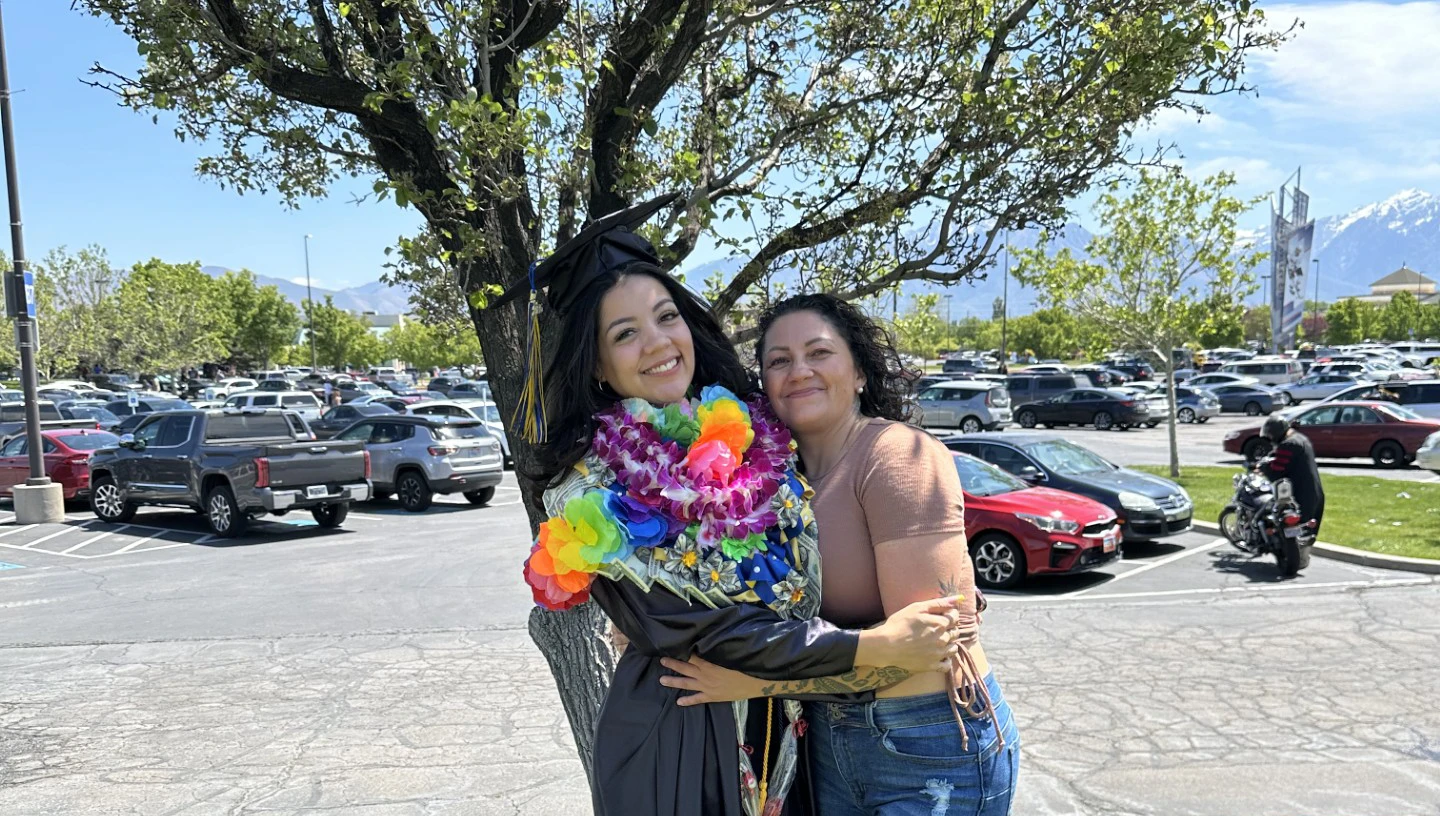
When Angelique Wallace walked across the stage at SLCC this past spring, she wasn't just accepting an associate's degree in social and behavioral science — she was completing a journey her mother once began but never had the chance to finish. And in doing so, she is providing a roadmap for her younger siblings.
Angelique's graduation is more than a personal milestone. It's a powerful example of how first‑generation students transform their families' futures, and often this can break generational cycles of poverty.
Angelique's mother, Rose Chavez, had become pregnant with Angelique at 16 and was on a path where even graduating from high school seemed unlikely. Raising and supporting a baby was up to her as a single mom with little to no support.
"When I got pregnant, I did a 180 to turn my life around. I did not want my kids growing up with a horrible childhood, like I had." She got a job, she enrolled at SLCC, bringing her toddler along to the Taylorsville Campus. Ultimately, it became too much to juggle.
"My mom always encouraged education," Angelique says. "She just couldn't make it happen for herself. Finishing my degree — something she wasn't able to do — felt incredible."
For Rose, watching Angelique walk up to accept her diploma also made her feel like she too had accomplished something big. "I broke the cycle. I was able to raise a great human being who would be able to succeed and have a better life than what I had come from."
Finding Her Way Back to School
Angelique's road to graduation wasn't linear. While in high school at Copper Hills, she earned her CNA certificate through SLCC and ultimately planned on becoming a nurse. She started at Southern Utah University, switched to elementary education, and then stepped away from college for ten years.
During that decade, she worked as a CNA, taught preschool, and ran her own cleaning business. But the desire to return to school never left.
"I knew for a long time that I wanted to get back to school, but I didn't know where to start," she says. A friend encouraged her to just start with her general education classes and see what sparked an interest.
A sociology course was that spark. "I really liked it," she says. "Then I found out I could go into it as an area of study." She admits returning to college as an older student was intimidating at first, but she quickly felt like she belonged in classes and on campus.
"I really liked all the guidance that was available. If you had questions, there was always a place to go for help and the professors were super understanding," says Angelique. "I never felt out of place because it's so diverse — different ages, different backgrounds. And honestly, the resources and access to flexible class schedules and online courses helped me stay in school." She rattles off some of the most helpful resources: the academic advisors, the tutoring center, the bruin pantry, the student center, and on-campus workshops.
Angelique relied on FAFSA to help pay for school and then worked as many hours as she could to cover bills while staying enrolled. It took three years to earn her associate's degree. This Fall, she will attend the University of Utah to earn a bachelor's degree in social work.
Her goal is to work with Child Protective Services (CPS) after earning her bachelor's degree. If she works with CPS for 18 months, the agency will reimburse her tuition at the U of U. "I think it will be challenging work," she admits, "but helping children has always been a passion of mine."
Meanwhile, her mother, Rose, is considering going back to school to earn her associate's degree and finish what she started so many years ago. "My kids have inspired me."