Beyond the Yellow Tape
How SLCC is Shaping the Future of Forensic Science
In Utah, the demand for forensic science technicians is expected to surge by 30% over the next decade. At Salt Lake Community College, a new generation of investigators is already preparing to meet that need, armed with cutting-edge technology and real-world experience that sets them apart.
In recognition of National Forensic Science Week (September 14-20), we at SLCC are taking a moment to celebrate the remarkable achievements of our students and the rapid growth of our Forensic Science classes. From winning national awards to presenting research on an international stage, SLCC students are not just learning about forensic science—they are actively shaping its future.
From Classroom to Crime Scene: Student Success Stories
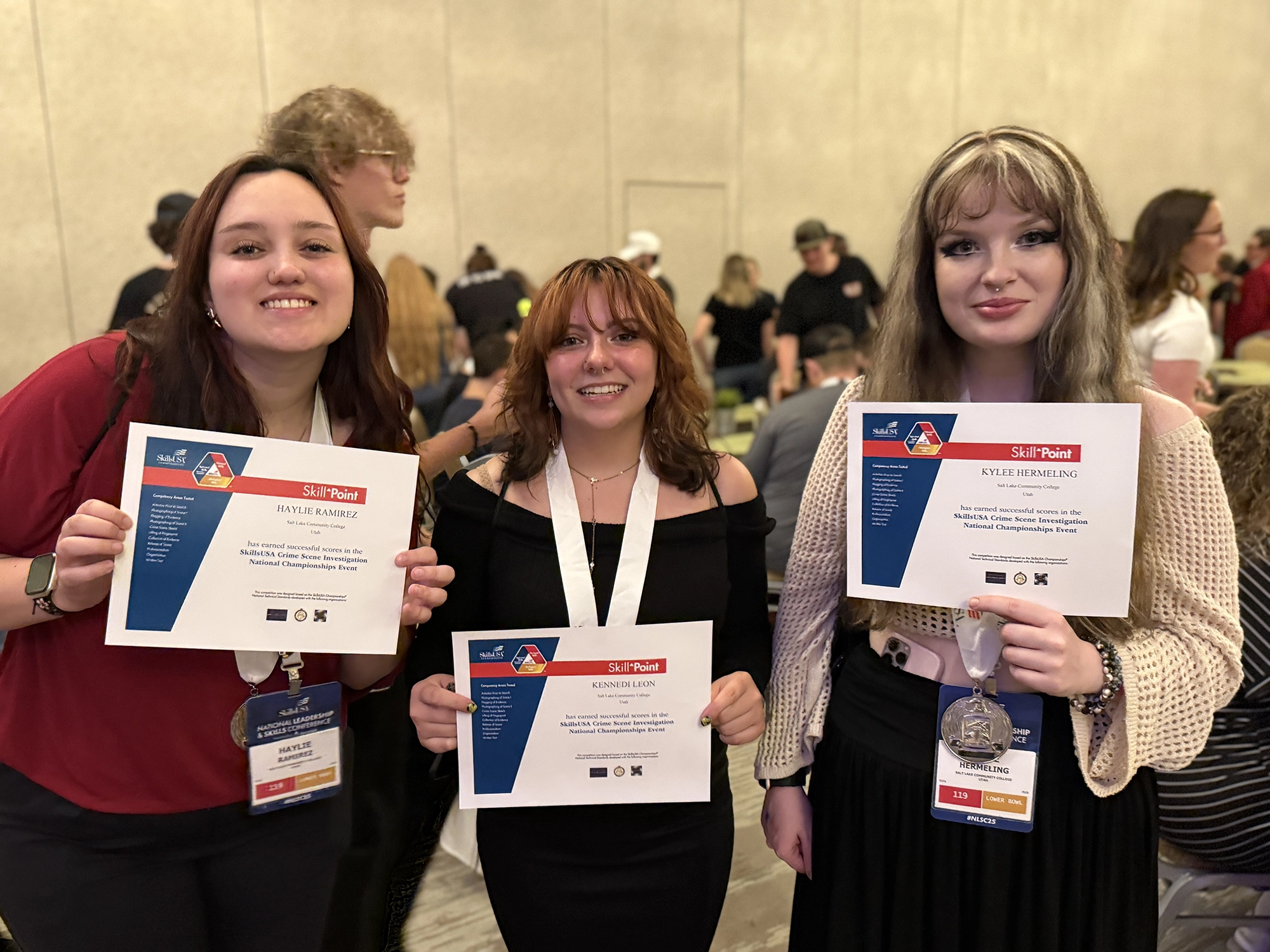
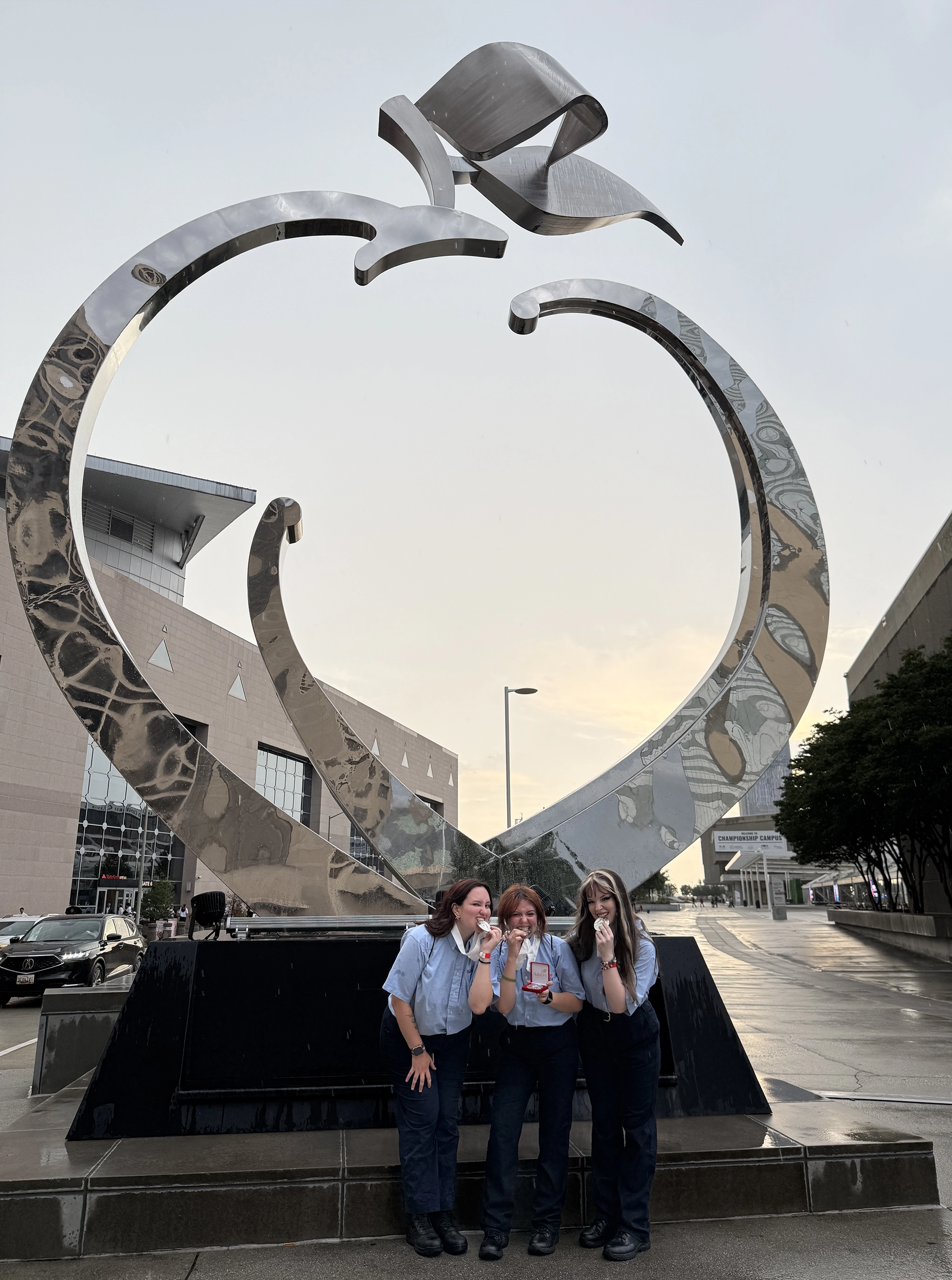
The real measure of any academic program is the success of its students, and by that standard, SLCC's Forensic Science program is excelling. Haylie Ramirez and Kylee Hermeling, SLCC Criminal Justice students, who recently won the silver medal from the national SkillsUSA competition in Crime Scene Investigation are an example of that success.
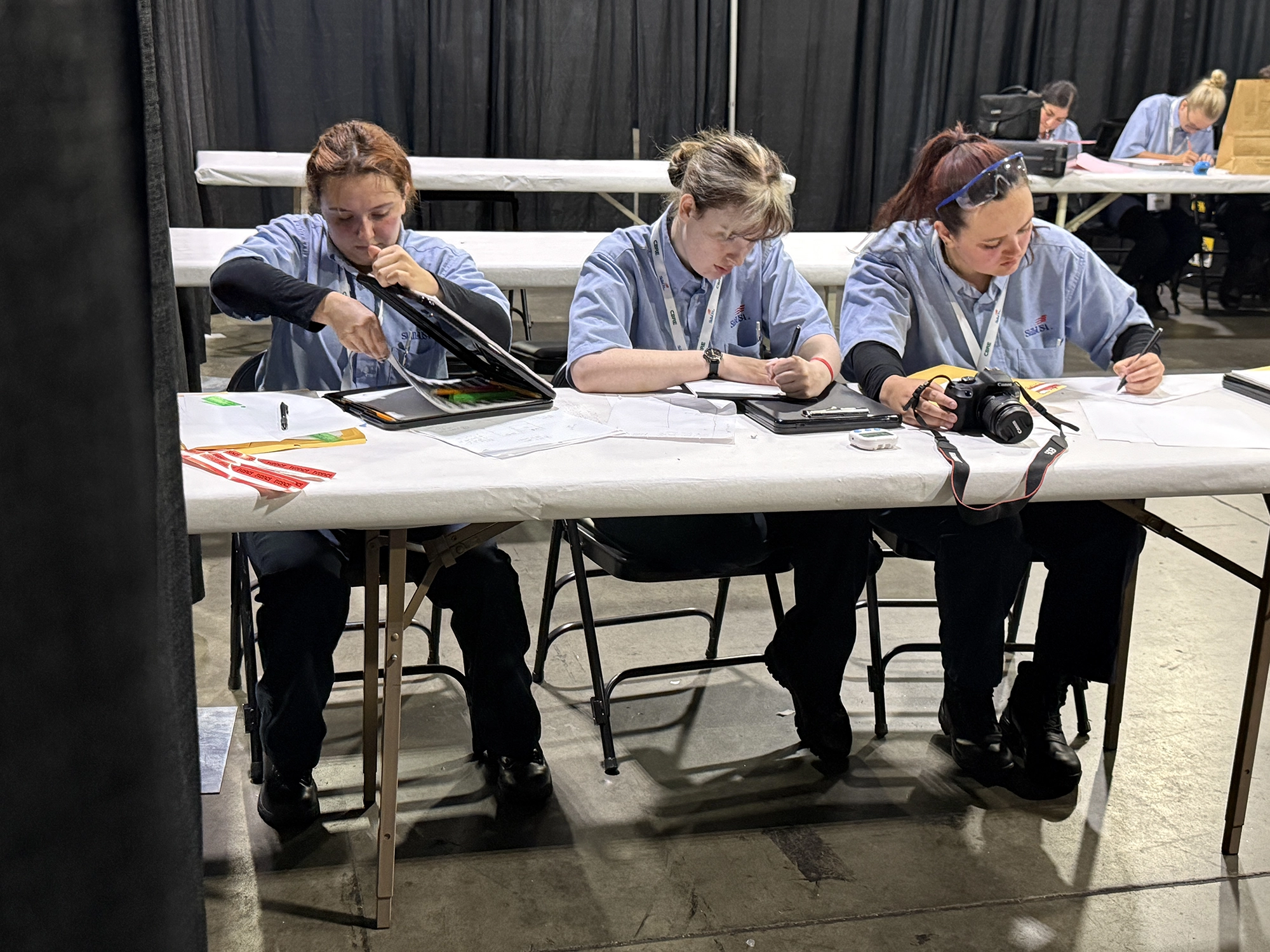
The competition is a pressure cooker: a seven-hour event where teams of three enter a staged crime scene, document every piece of evidence, and process it just as they would in a real-world scenario. "You have to sketch the scene, you have to photograph the scene, you have to collect evidence, you have to write reports... it's a lot," explains Hermeling. Their second-place finish is a testament not only to their skill but to the rigorous, hands-on training they receive at SLCC.
But their achievements didn't stop there. Haylie, Kylie, and Kennedi presented their research that focused on an assessment of Forward Looking Infrared (FLIR) Technology for search, rescue, and evidentiary recovery. This project was inspired by the plane crash in D.C. where first responders struggled to locate remains and evidence after a plane and helicopter collided over a body of water.
The duo, along with teammate Kennedi Leon, also had the rare undergraduate opportunity to present their capstone research at the International Association for Identification (IAI) conference, one of the largest gatherings of forensic scientists in the world. Invited to present alongside seasoned professionals, they shared their research focusing on an assessment of Forward Looking Infrared (FLIR) Technology for search, rescue, and evidentiary recovery, a project inspired by the plane crash in D.C. where first responders struggled to locate remains and evidence after a plane and helicopter collided over a body of water. Another student (Maria Padilla) presented a dif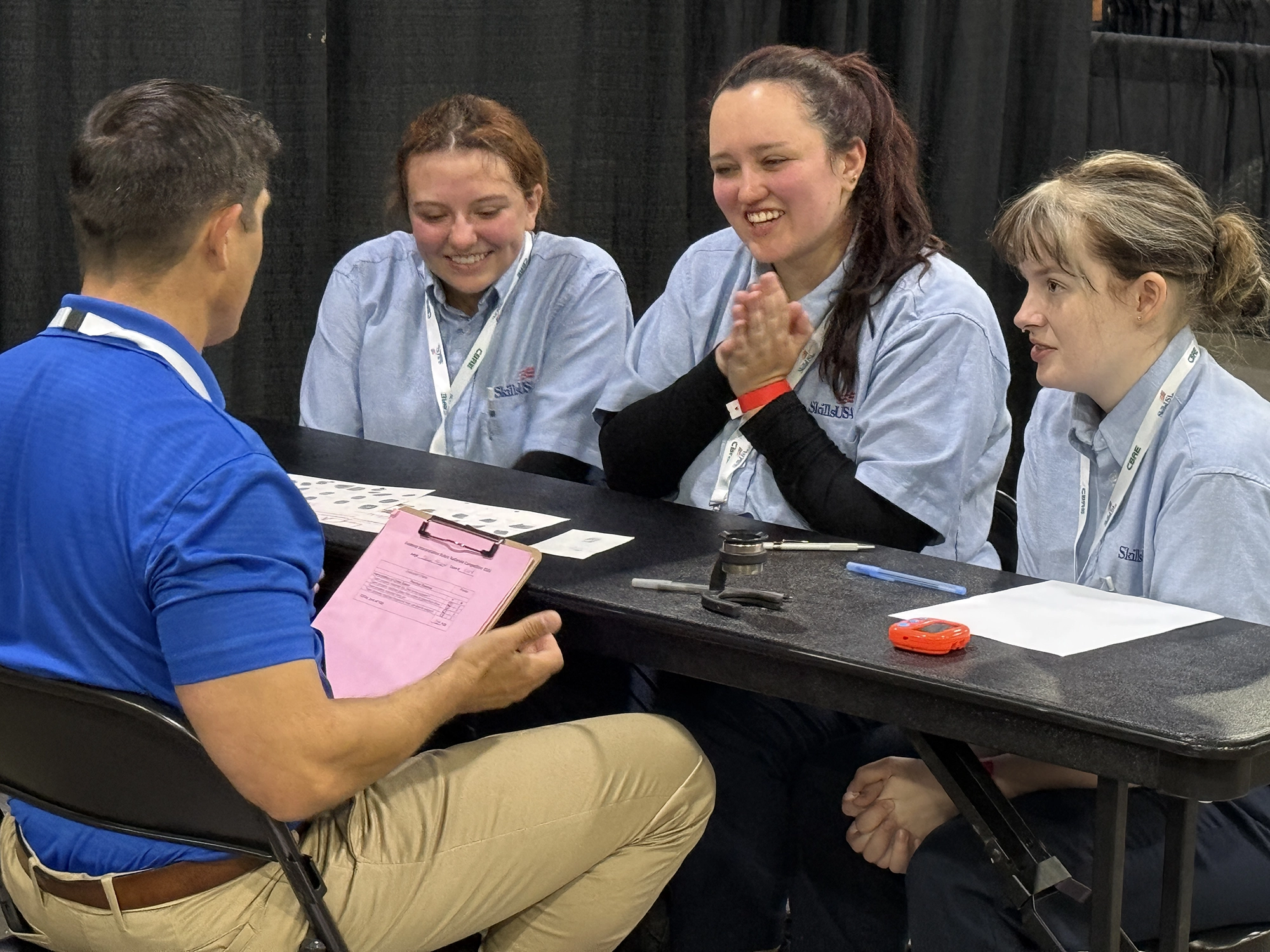 ferent project at the same IAI conference focused on surveillance camera/facial recognition deceptive tactics, including adversarial patterns, light sources, and reflective items.
Students that attended the IAI conference also completed workshops alongside working practitioners and received board certified continuing education credits. "It was an amazing experience," says Ramirez. "To be able to network with people who are already in the field and get their feedback on our work was invaluable." These are the kinds of experiences that define the SLCC advantage, providing students with a platform to test their skills, build their confidence, and make connections that will launch their careers long before graduation day.
A Program on the Cutting Edge
At the heart of SLCC's Forensic Science program is a commitment to providing a top-tier education, a commitment championed by Stephanie Hoffman, the Forensics Lab Program Coordinator and an Associate Professor of Criminal Justice. An International Association for Identification (IAI) Board Certified Crime Scene Investigator, Professor Hoffman brings a wealth of real-world experience to the classroom, ensuring that students are learning from a seasoned professional who is actively shaping the field.
Her leadership has been instrumental in securing over $120,000 in Perkins Grant funding, which has been used to outfit the college's labs with state-of-the-art instrumentation, software, and supplies. This investment provides students with hands-on access to the tools transforming modern crime scene investigation, from advanced forensic photography equipment to the latest analytical software.
"Our goal is to bridge the gap between the classroom and crime scenes and labs," says Hoffman. "By providing students with access to the same technology used by professionals, we are ensuring they graduate with the confidence and competence to excel from day one of their careers. We are incredibly grateful for the grant funding that has made these upgrades possible."
Under her guidance, SLCC students are not just learning theory—they are practicing the skills that will make them invaluable to future employers and competitive with students from four-year institutions.
The Power of Partnership: Thanking Our Supporters
A program's success is not built in a vacuum, and SLCC's Forensic Science program has achieved high success thanks to the strong network of industry partners and donors. These partnerships are vital, providing students with invaluable opportunities to network, find mentors, and gain exposure to the latest industry trends long before they graduate.
The support from these partners extends beyond mentorship. Volunteer judges—including professionals from law enforcement, forensic labs, education, and private industry—have generously offered their time and expertise to evaluate student work, share career insights, and provide constructive feedback that strengthens future competition performance and career readiness. Hoffman and her student's express gratitude to:
- Julia Tingey, Forensics Instructor, Canyons Technical Education Center (CTEC)
- Holly Arguello, Forensic Scientist I, Salt Lake City Police Department; Investigator II, Utah Department of Health; SLCC Adjunct Instructor
- Jason Cole, Technical Sales Specialist, Foster & Freeman USA, Inc.
- Tracy Bradshaw and Michelle Kuhn, Security Specialists, FBI – Salt Lake City
- Troy Kipp, Forensic Scientist and Graphic Artist, Lifetime Products
In addition, generous prize donations and contributions of instrumentation, software, and supplies have significantly enriched the hands-on learning environment at SLCC. These resources ensure our students are working with the same tools and technologies they will encounter in the field. Thanks go out to:
- Kolari Vision LLC
- SmartSafety Software (Trancite)
- Arrowhead Forensics
- Forensic Pieces
- Professor Hoffman and her family
"We are deeply grateful for the continued investment from the community in the next generation of forensic scientists. We would like to extend a special thank you to all the donors and volunteer judges who have supported our work," said Hoffman.
This collaborative spirit ensures that our program remains on the cutting edge and that our students are learning with the tools and technologies they will use in their professional careers.
Your Future in Forensics Starts at SLCC
The field of forensic science is experiencing rapid growth, and the demand for skilled technicians is on the rise. The U.S. Bureau of Labor Statistics projects a 13% increase in demand for forensic science technicians between 2022 and 2032, a rate much faster than the average for all occupations. For those with a passion for investigation and a meticulous eye for detail, there has never been a better time to pursue a career in this dynamic field.
At Salt Lake Community College, you'll find a program that not only equips you with the foundational knowledge you need but also provides the hands-on experience that will set you apart. Whether your dream is to work in a crime lab, for a law enforcement agency, or in the private sector, SLCC provides a clear and affordable pathway to a rewarding career. Learn more at our Department of Criminal Justice