Meet Some of the SLCC Students in the 2025 President's Art Show
Every year, the President's Art Show showcases Utah artists, from the statewide to the local — and what could be more local than our own students? This year, six SLCC students are included in the 98 professional and amateur artists showcasing their skills as part of the exhibit. We're doing our own showcasing by introducing you to Emily Valdez, Ke Li, and Raine Bastian, three current Bruins whose submissions were selected for display at the 31st edition of the President's Art Show.
The President's Art Show is open to the public from November 6 - 18 in the Multipurpose Room at South City Campus. To learn more about the show, click this link.
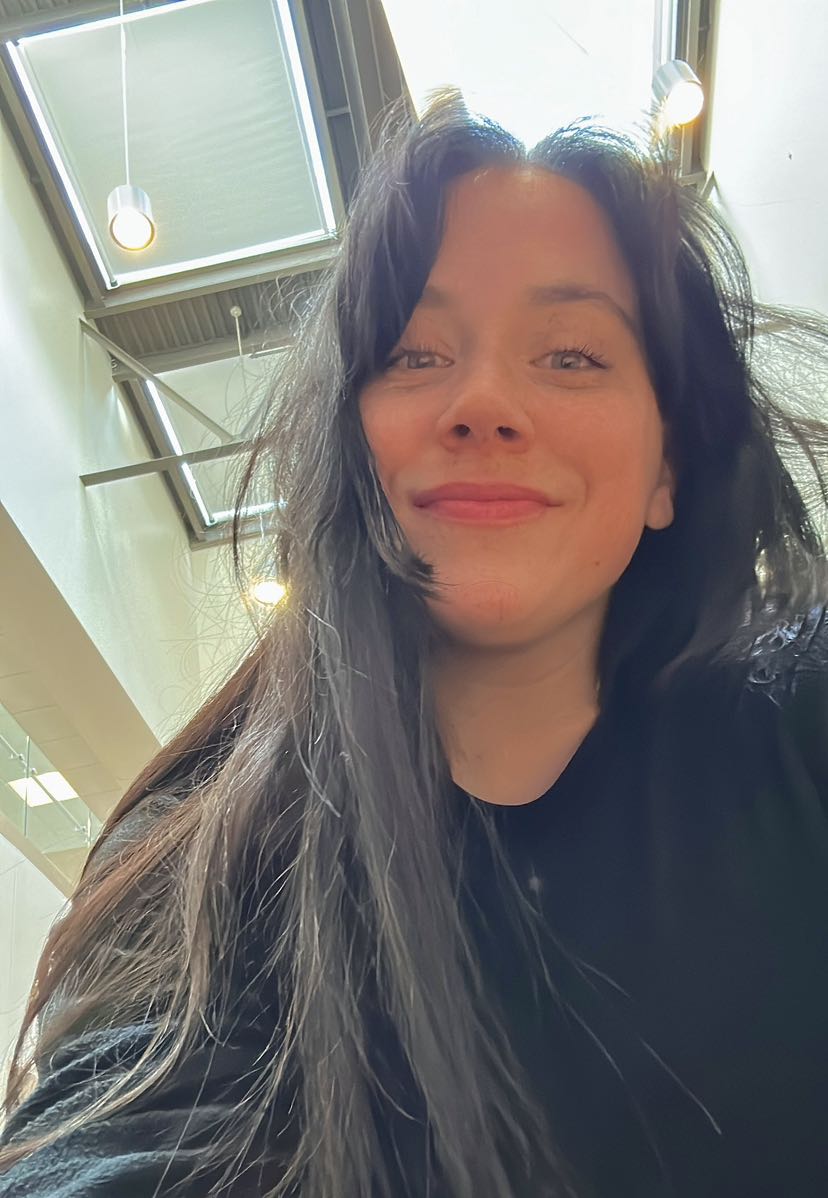
Emily Valdez
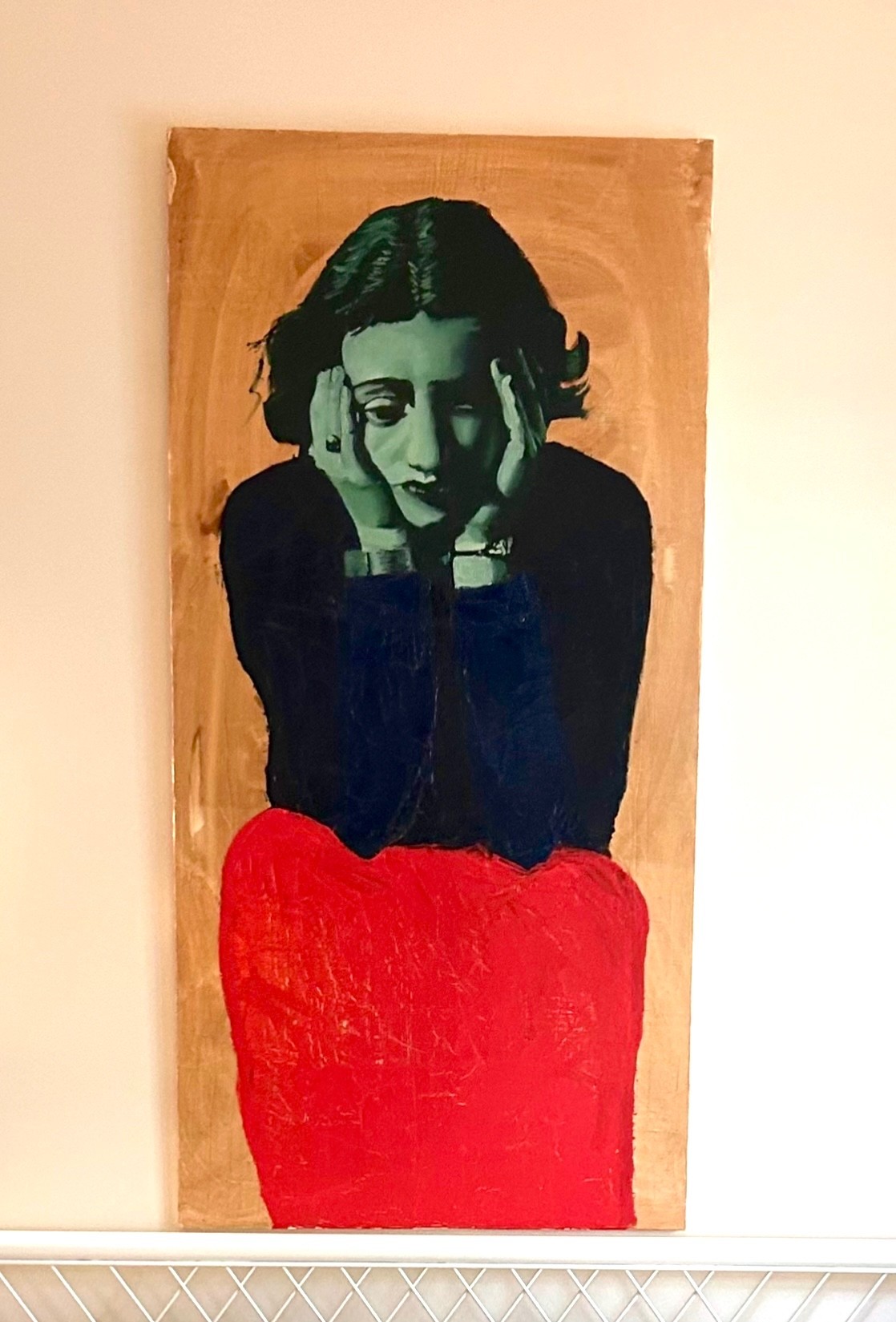
Exhaustion Ritual, 2025
Oil on Wood
47 ½ x 24 inches
For SLCC student Emily Valdez, who specializes in digital art, the physical media of "Exhaustion Ritual" represent a departure from her typical medium. That departure is at least partially attributable to her studies in art and communications at South City Campus, which exposed her to other types of artistic production.
"I'm primarily a digital artist," she says,"but I have been taking a lot of physical media classes, just to get the principles down." Those classes are part of a developmental path that she describes with terms like "exploration" and "experimentation." Putting the results on display at PAS25 is also a personal and professional growth opportunity."I think it's great for students to have this opportunity," she says."Big confidence builder."
The mix of media may be new for Valdez, but the theme isn't. The title is a nod to coping with the "endless demands of a system that asks for everything and gives so little in return." Capitalism, colonialism, patriarchy — she's critiquing them all, noting that "There's just a lot of expectations in our society about how to be successful and survive."
The painting depicts this by pairing a pliable medium, oil paint, with a rigid, unyielding one, a wooden panel that Valdez prepared with an intentionally rough and "nasty" texture. "The woman in the painting is a softer figure," she explains. "I like how her face is soft and she's curling up into herself. In the background, the texture and the wood are very hard, and the paint softens her."
That's exactly the juxtaposition she wanted to depict. "The world is," she says, pausing before continuing, "it's hard out here, you know?" She summarizes the effect that juxtaposition has on the viewer in one word: "Empathy." Pressed for more, she explains: "Those moments of exhaustion are kinda private and pulled into yourself. I just want it to connect with that feeling in other people."
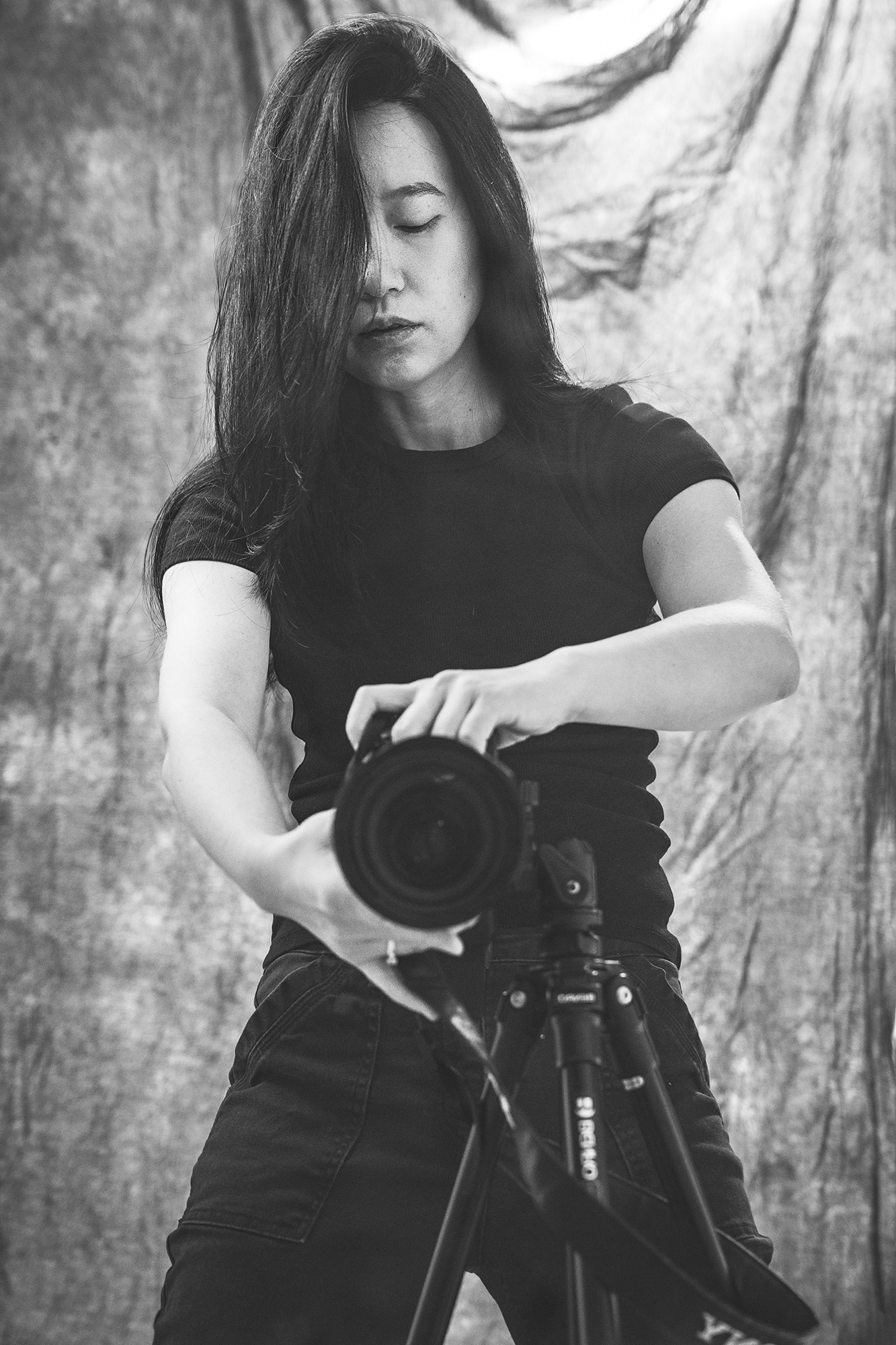
Ke Li
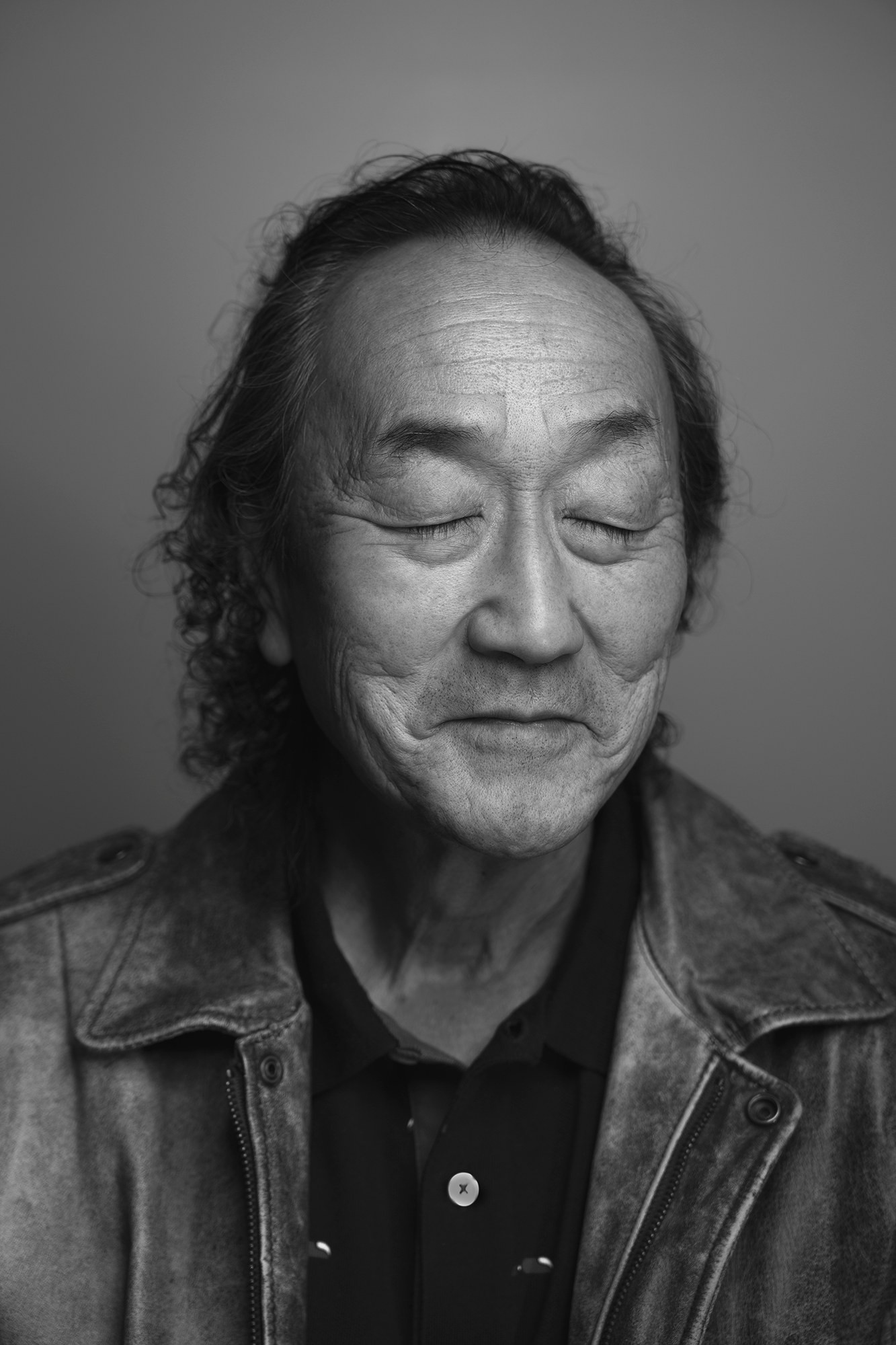
Portrait, 2025
Photograph (digital photograph on cold-press paper)
24 x 18 inches
SLCC student Ke Li's approach to photography can be described as a type of poetry, a visual grammar that combines the subject matter and technical craft in ways that magnify the impact of both.
Even for a casual viewer, the striking shades, textures, and values of"Portrait" describe an obvious expertise in technique. "I used a simple and direct lighting setup to mirror the quiet mood of the subject," she explains, going on to detail other lighting implements — a gridded octagonal softbox and black V-flats — arrayed to"shape a subtle depth and stillness within the frame." Post-processing was also simple, she says, "with only subtle skin retouching to preserve the authenticity and texture of the image."
While describing the process behind her work, Li frequently returns to words like "simple" and "subtle," but her understanding of the cumulative effect is anything but simple. A well-framed photograph directly refutes the apparent simplicity of its composition.
"To me, photography is a language for emotion and imagination," she explains. "It gives me a way to visualize my inner world and to see this world with greater depth — transforming the ordinary into something extraordinary and beautiful." In "Portrait," the subject is as everyday and ordinary as a random neighbor, Steve.
Before photographing him, Li's knowledge of Steve was limited to three things: he plays the accordion, enjoys hot coffee, and has a white dog. In the photograph, she hopes to discover so much more. "I aim to reveal the subject's individuality and physical presence, allowing his true character to emerge through the image." Doing so, she says, is a way to foreground the subject's individual dignity and humanity: "In every portrait I create, my first intention is to show respect for the person in front of the camera."
Li also insists on showing respect for the people who taught her the techniques she uses behind the camera, expressing gratitude to her teachers, Ed Rosenberger and Whitney Hyans. "They not only taught me the essential techniques of photography," she enthuses,"but also opened my eyes to see the world through a photographer's perspective."

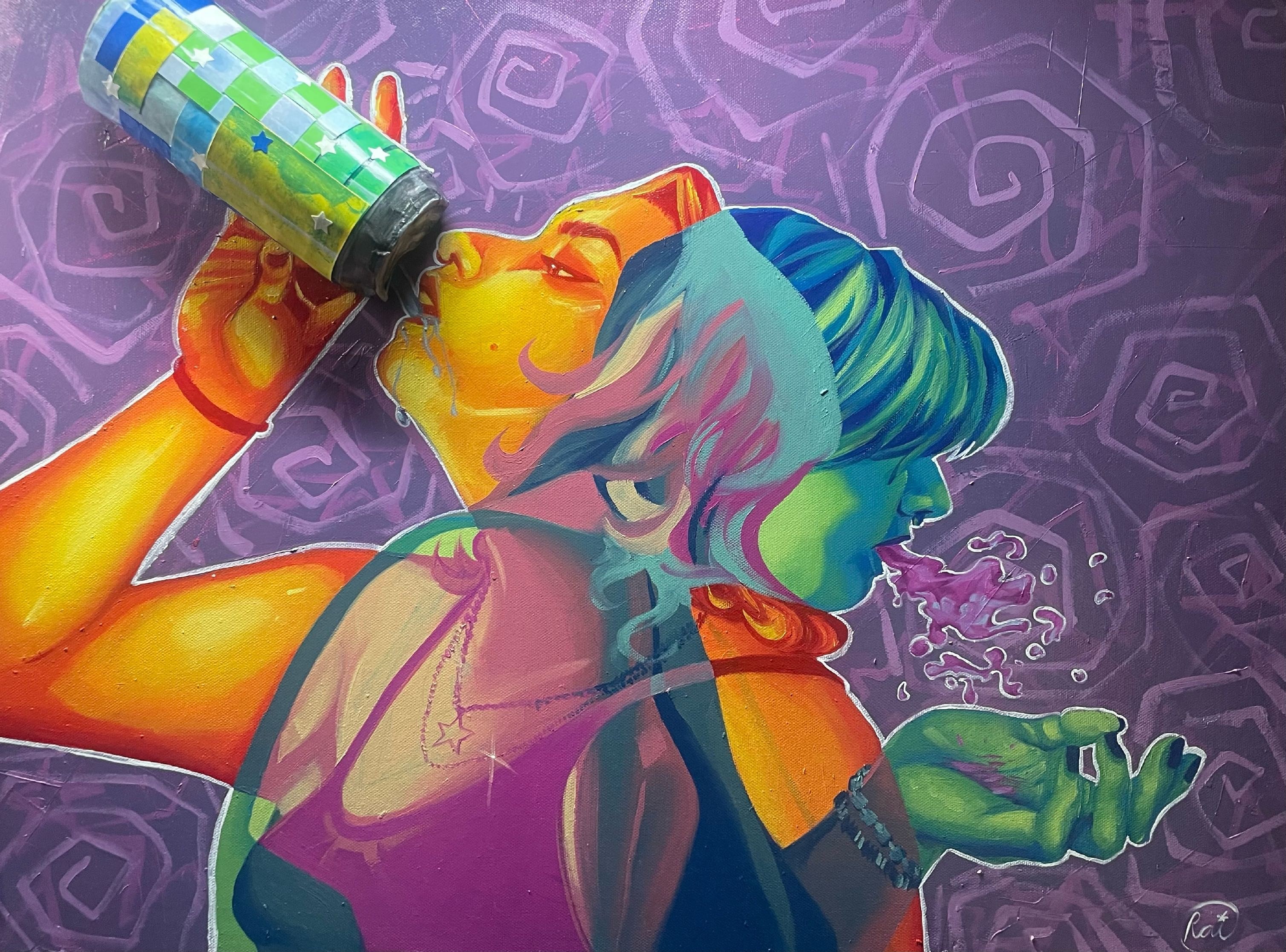
Raine Bastian
Giving, Taking, Taking, Giving, 2025
Oil, acrylic, papier mâché, and construction paper on canvas
18 x 24 inches
Raine Bastian's multi-media work "Giving, Taking, Taking, Giving" began and ended with a single clear idea: caffeine, and how much of it we consume.
“This piece is partially a statement on caffeine addiction," they say. "Caffeine addiction is one of the few types of addiction that is deemed socially acceptable. I want to spark a conversation about caffeine dependence and hopefully push people towards making healthier decisions, for both their mental and physical health." And while that theme remained constant while they were producing the piece, everything else changed. A lot.
The first thing that a viewer might notice about the piece is the color palette used for the two figures — one glowing and warm; the other cool and depressed. Bastian says the original plan was realistic skin tones, but that muddied the piece, and the polarity of the brighter palettes matches the figures' postures. The former is exultantly upright, slamming a stimulant-reinforced drink. The latter demonstrates the inevitable crash after the caffeine (and whatever other additives the drink includes) wears off — slumping and apparently regurgitating something harmful.
In addition to being thematically appropriate, Bastian found that choosing high-contrast colors improved the composition. "It allowed me to push and pull values and create a more cohesive piece. It was also a great lesson in color theory and overlapping forms!" Bastian also planned to leave the can with its original label, but once they began playing with values, they realized that repainting the can to connect with the ‘downer' version of the central figures "made the piece more cohesive," both thematically and in composition.
Given the amount of experimentation involved, Bastian frames the creation of the piece as an exercise in learning and exploration — apt, considering they're a student. They feel the same about participating in PAS25, calling the show a community-building opportunity for young artists.
"These are people that you can learn from and create connections with," they conclude. "As a student, you're here to learn. What better opportunity to learn as an artist than in a juried art show with your peers?"